


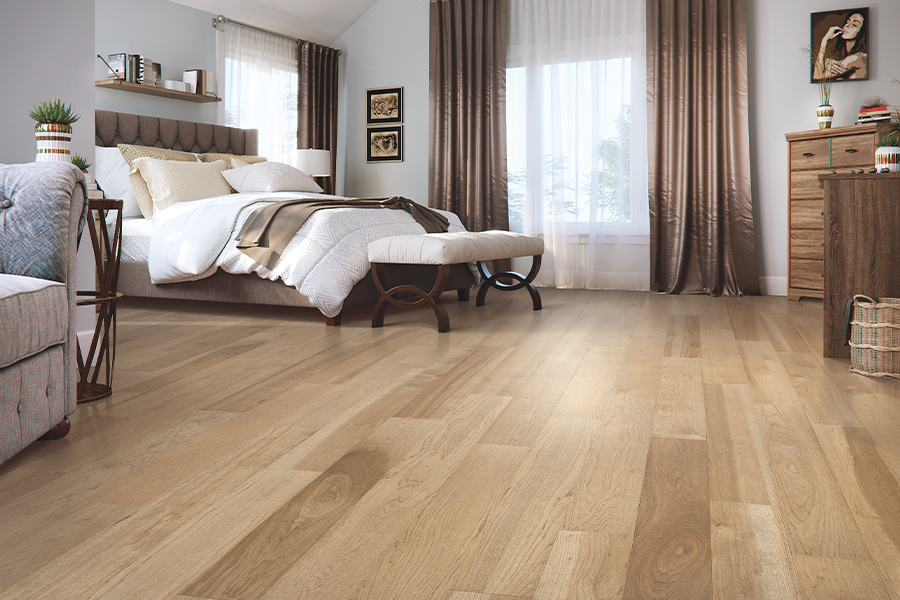
Engineered vs Solid Hardwood Floors is a commonly asked question. It usually comes in the statement “I don’t want the fake wood flooring but the real thing.” Amazingly, they are both real wood.
The Raw Breakdown is simple. Solid is a thick slice of hardwood from a tree. It can be cut a few different ways for different grain looks, but it is usually ¾” thick once finished. It can vary from 2 ¼” wide to 5” wide usually. Engineered wood, which looks the same many time because of the real wood top, is a thinner piece glued onto plywood stacks. That top piece can be 1.2 mm thick to 5 mm thick at times. Total thickness ranges from 3/8” to ¾” thick.
Who wins on moisture? Solid hates it. It can swell, cup, and gap in homes for a number of reasons. Areas with high humidity, steam mops, or homes that are not kept acclimated all year can have issues. Engineered shrugs off humidity and is better to install it over concrete. Engineered floors are usually installed using adhesive or use a click and lock systems so they can be installed in more areas easily than solid. Basements? Engineered every time, but there are installation systems that allow for solid wood. It is more work, but you can have it done.
Refinishing options. Solid can get five, six, ten sands over many years. It also allows for color changes and changes in the finish if you don’t want a shiny floor but a more natural look with less shine. Engineered are none to many full refinishes. Thicker veneers can give you almost the same as a solid wood floor. The lower entry level cost products won’t allow for sanding. The waterproof wood flooring options won’t allow for sanding either. There are process to recoat those types of floors, but you need to make sure to do it before the top finish is totally worn through.
Install ease? Solid needs wood sub-floor, nails, some professional installation tools. The more saws you have and the right nailing tools, the better chance you will have for a good installation.
Engineered can be glued or clicks down on plywood, tile, concrete which requires less tools and sometimes a faster installation.
Plank size and trends want wider and longer boards with the options for patterns such as herringbone. Engineered wood locks together tighter with less warping in the planks where you can only go up to 5” wide with solid. Engineered planks give you more texture finish options with special coloring processes, oil finishes, wire-brushed, or hand scraped finishes. Solid does offer some of the same options, but is less size options. If you go old school with sand and finish, there are hundreds of colors, designs, textures, and options you can do. It is only limited to the imagination what you can install and create.
Cost vs life of the floor. When it comes to wood flooring, it will be similar to you get what you pay for. Cheap flooring will give you cheap outcomes with short life spans. Solid floors will allow you to sand and finish again over a long span of time so you will have a good investment. Engineered wood also has an extremely hard factory finish when you get quality products that can last for many years. Oil finished products can be cleaned and re oiled while other finished products can be re-coated without sanding as well to keep the new look. You will just have to stay on top of how it is holding up to make sure you do everything you can to maintain it with proper cleaning and maintenance.
When installing over concrete, you may need to have it checked for moisture and seal it before the installation. You will need to make sure that the floors are flat with no low or high areas as well. Wood flooring doesn’t flex, so sub floors have to be flat.


