


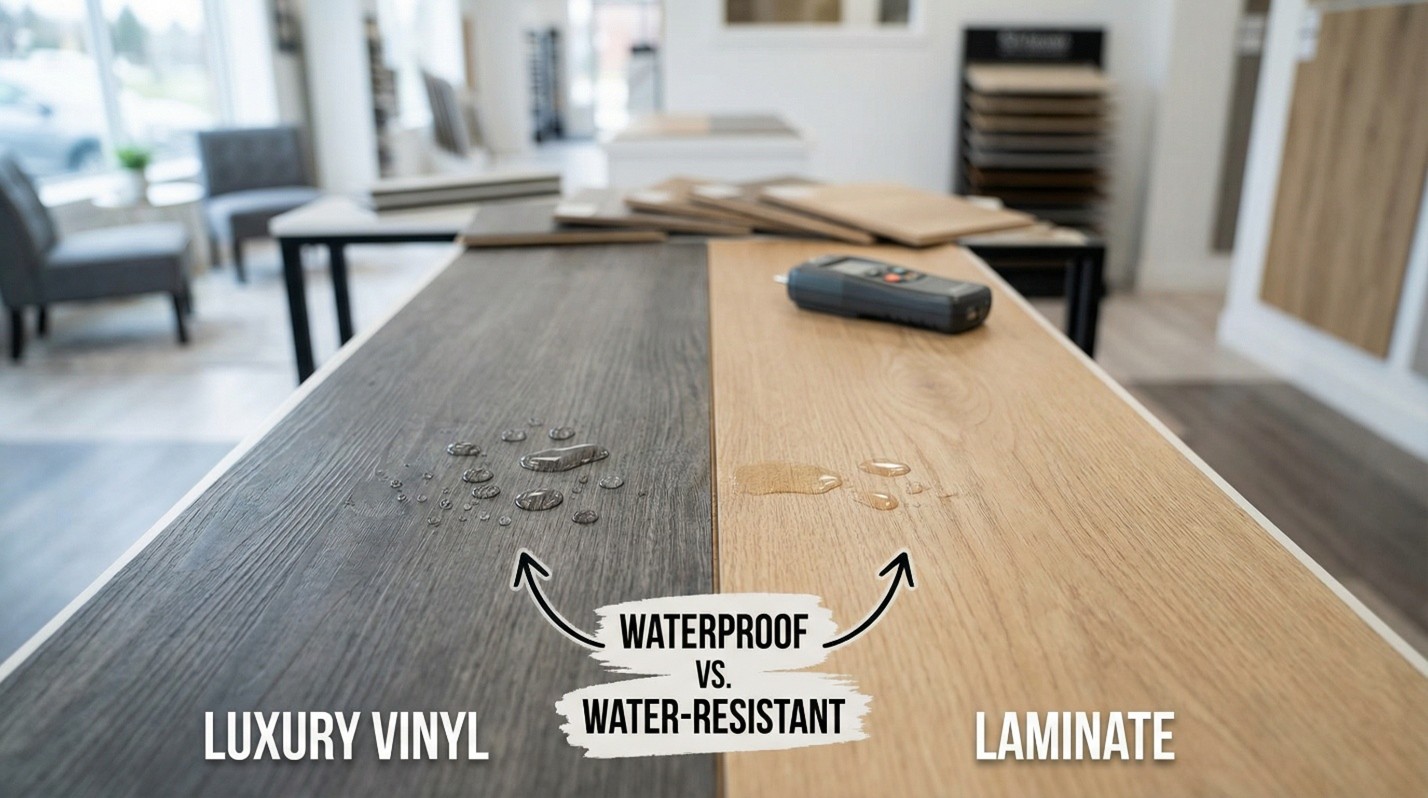
When it comes to choosing durable, water-resistant flooring, both luxury vinyl and laminate are top contenders. This post will help you understand the key differences between these two popular flooring options, from their construction and waterproof capabilities to their appearance and cost. By the end, you'll have a clearer idea of which material is the perfect fit for your home and lifestyle.
Choosing the right flooring is a crucial decision for any homeowner. It sets the tone for your space, how it withstands daily life, and can even impact your home's value. For years, homeowners seeking a durable and water-resistant alternative to hardwood have turned to luxury vinyl and laminate flooring. Both offer the beautiful look of natural materials without the high cost and maintenance. But when it comes to a truly waterproof solution, which one comes out on top? This guide will walk you through the key differences between luxury vinyl and laminate, helping you make an informed decision for your home.
Luxury vinyl flooring is a synthetic flooring material that has gained immense popularity for its durability, water resistance, and realistic appearance. It is available in two main forms: Luxury Vinyl Plank (LVP), which mimics the look of hardwood, and Luxury Vinyl Tile (LVT), which replicates the appearance of stone or ceramic tile. The core of luxury vinyl flooring is typically made from a mixture that uses PVC, which makes it a highly durable and waterproof material. Some higher-end luxury vinyl products feature a rigid core construction, such as Stone Plastic Composite (SPC) or Wood Plastic Composite (WPC), which enhances their dent resistance or comfort and sound reduction.
Laminate flooring is another synthetic flooring option that provides the look of wood or stone at a more affordable price point. It is constructed in layers as well, with a core of high-density fiberboard (HDF) or medium-density fiberboard (MDF). While the original construction of laminate flooring is not waterproof and can be susceptible to water damage, recent innovations have led to the development of water-resistant and even waterproof laminate options. These newer laminate products are designed to withstand moisture, making them a more viable option for kitchens, bathrooms, and basements.
When it comes to flooring, the terms "waterproof" and "water-resistant" are often used interchangeably, but they have distinct meanings. A “water-resistant” material can repel water for a certain period, but it is not impervious to it. If water is left to sit on a water-resistant surface for too long, it can eventually seep in and cause some damage. On the other hand, a “waterproof” material is completely impervious to water, no matter how long it is exposed to it.
In the context of flooring, this distinction is crucial. While water-resistant laminate can handle spills and splashes, it may not be the best choice for areas with high moisture levels, such as bathrooms or laundry rooms where there is constant exposure to water on the floor. Waterproof luxury vinyl, with its PVC core, offers a higher level of protection against water damage, making it a more reliable choice for these spaces.
Head-to-Head Comparison: Luxury Vinyl vs. Laminate
LVP/LVT composition is a PVC core, with optional SPC or WPC rigid core | Laminate is a High-density fiberboard (HDF) or medium-density fiberboard (MDF) core
LVP/LVT is typically 100% waterproof |Laminate varies from water-resistant to waterproof, depending on the product
Both have realistic visuals in both wood and stone
LVP/LVT is a durable product when using higher quality products. SPC cores are dent resistant and WPC are more sound absorbing. They are scratch resistant, but not as tough as laminate. Laminate is more rigid and scratch resistant, but sometimes needs extra underlayment to help with sound and it isn’t fond of water.
Laminate is more cost friendly than Luxury Vinyl, but Luxury Vinyl has more options and sizes than laminate.
Luxury Vinyl can be installed without a locking system and glued to the floor. Both Laminate and Luxury Vinyl can be found with click-lock systems for floating installation.
Maintenance is the same for both. Use neutral pH cleaners and keep them swept clean. Steam mops may not affect Luxury Vinyl, but you don’t want the steam to get under the flooring over time because it will cause problems. Just use a micro fiber mop to clean the flooring.
Ultimately, the choice between luxury vinyl and laminate flooring will depend on your specific needs and priorities. If you're looking for a 100% waterproof flooring solution that can withstand heavy traffic and moisture, luxury vinyl is the clear winner. It's an excellent choice for kitchens, bathrooms, basements, and any other area of your home where spills and splashes are a concern.
If you're on a tighter budget and are looking for a durable and attractive flooring option, water-resistant laminate can be a great choice. It offers a wide range of styles and is relatively easy to install, making it a popular option for DIY enthusiasts.
Both luxury vinyl and laminate flooring have come a long way in recent years, offering homeowners a wide range of stylish, durable, and water-resistant options. By understanding the key differences between these two materials, you can choose the flooring that best suits your lifestyle, budget, and design preferences. Whether you opt for the unbeatable waterproof protection of luxury vinyl or the budget-friendly appeal of water-resistant laminate, you can be confident that you're making a smart investment in your home.


